
What Is a Bully Stick Holder, and Does Your Dog Need One?
Share
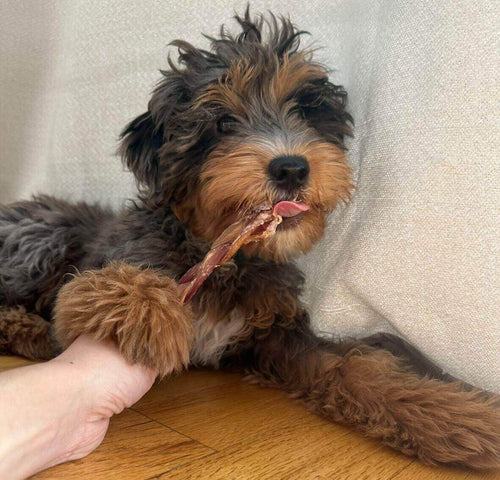
Bully sticks can keep dogs happily occupied, but chew time gets trickier as the stick wears down. Once only a small end piece remains, it may be difficult for your dog to hold with their paws and tempting to swallow whole.
That’s where a bully stick holder can help. It secures one end of the chew, giving you more control over the final piece and making the treat easier for your pup to handle.
In this guide, we’ll explain how bully stick holders work, why pet parents use them, how to use one safely, and what sets our Grab-A-Bull® Chew Holder for Dogs apart.
What Is a Bully Stick Holder?
A bully stick holder is a reusable device that grips one end of a bully stick or another compatible chew. Instead of holding only the treat, your dog works with a larger object while chewing the exposed section.
As the stick becomes shorter, the holder may help keep the final piece attached instead of leaving your dog with a small, loose end piece that could be swallowed. That extra control can be useful because dogs may have trouble holding a chew with their paws once only a short piece remains.
Different products use different designs. A bully grip may rely on a screw, internal clamp, textured hole, or twist mechanism to create a secure hold. Some holders resemble a simple safety device, while others function more like an interactive chew toy.
Compatibility can vary considerably. Thin bully sticks, unusually thick chews, curved treat sticks, or short pieces may not fit every fastening system. You should never force a chew into a holder or assume that a product can prevent choking under every circumstance.
That said, it’s important to remember that no holder can make chew time completely risk-free. Dogs can still work a stick loose, bite off a large chunk, or attempt to swallow the last piece. That’s why close supervision is always a must, no matter how secure the holder seems.
What Are the Benefits of Using a Bully Stick Holder?
A holder gives you greater control over how a bully stick is presented and how much of it remains available. It may also help dogs that struggle to keep a loose chew steady between their paws.
Depending on its shape, the holder can also add a little movement and resistance to keep things interesting. These benefits may make chewing easier to monitor and more engaging, although the device must remain securely fastened and undamaged.
It Helps Secure the End of the Chew
The holder grips part of the bully stick while your furry friend gnaws the exposed portion. Keeping the bottom section attached may make it harder for a dog to swallow the remaining end piece whole when the chew becomes too short to hold comfortably.
This doesn’t mean the last piece is impossible to reach or dislodge. Check the grip during the session, particularly if your dog twists, tugs, or bites forcefully. Remove the setup immediately if the stick begins to slide through the opening.
A secure hold depends on the relationship between the chew and the holder. A plastic screw or internal clamp may work well with one stick but struggle with another that’s especially thin, uneven, damp, or soft from prolonged chewing.
Before giving the holder to your dog, pull firmly but gently on the exposed treat. If the bully stick moves, don’t rely on the device. Reinsert it according to the instructions or choose a more compatible chew.
It Can Make Treat Time More Engaging
Some holders move while a dog chews, turning an ordinary treat into a more interactive chewing activity. Your dog may need to reposition the toy with their mouth, nose, and paws as it rocks or rolls across the floor.
That added resistance may encourage your dog to reposition the holder and interact with the chew in a different way. For dogs that enjoy movement, the holder may bring a little more fun to a familiar treat without adding more food.
However, interactive movement isn’t appealing to every dog. A cautious puppy may need time to investigate the holder, while an aggressive chewer may become frustrated and attack the device instead of working calmly on the treat.
Let your dog explore at their own pace. Stop using the holder if they repeatedly bite the material, become overly excited, or seem more focused on destroying the toy than chewing the inserted stick.
It Can Make the Chew Easier to Monitor
A loose bully stick can roll beneath a couch, bed, or cabinet, where your dog may continue chewing outside your view. A larger holder is generally easier to spot and retrieve before the treat disappears under furniture.
Its size can also make it easier to check on the remaining portion of the treat. Instead of searching for a small, slippery end piece, you can inspect the exposed section and remove the holder when the treat becomes too short, loose, or damaged.
Still, visibility isn’t the same as supervision. You’ll need to stay close enough to notice gagging, coughing, forceful pulling, changes in chewing behavior, or damage to the holder. Choking can become an emergency quickly, so always be prepared to intervene if necessary.
Set up chew sessions in an open area where you can see your dog clearly. Don’t leave the holder with your pup while you run errands, sleep, shower, or move to another part of the home.
Does Your Dog Need a Bully Stick Holder?
A bully stick holder isn’t essential for every dog, but it can be a practical addition to supervised chewing. It may offer extra peace of mind when your dog has a habit of gulping the last piece or pushing loose treats into hard-to-reach places.
Your dog may benefit from a holder if they chew steadily but try to swallow the final end piece. It can also help when a dog has trouble bracing a stick with their paws or repeatedly drops it as the treat gets shorter.
A calm chewer that allows you to remove the last inch without trouble may not need this tool. Some pet parents prefer to watch the chew closely and take it away by hand before it becomes small enough to swallow.
A holder may be a poor match for a dog that bites hard into plastic or rubber, pulls aggressively, or treats every object as something to destroy. A determined aggressive chewer may damage the safety device or loosen the inserted treat.
Consider your dog’s age, body size, mouth size, dental health, and chewing habits. Chews that are too hard can damage dog teeth, while pieces that are too small can create a choking risk. Ask your vet for guidance if your dog has cracked teeth, gum disease, mouth pain, or a history of swallowing objects.
Remember, no holder can eliminate every risk. Its purpose is to help you manage a compatible stick during an observed session, not to prevent dogs from choking without supervision.
How Can You Choose the Right Bully Stick Holder?
Start with your dog rather than the product packaging. The right setup should account for their mouth, strength, chewing technique, and ability to interact with the holder without biting off pieces.
You’ll find a wide variety of bully stick holders on the market, each securing treats in a slightly different way. Since these devices don’t all work the same, make sure to check the instructions and compatibility requirements for the exact product you’re considering.
Match the Bully Stick to Your Dog
Choose a bully stick that’s long and wide enough that your dog can’t place the whole treat in their mouth. A stick that suits a small puppy may be dangerously undersized for a large dog, even when both chews fit inside the same holder.
Look at how your dog eats rather than relying only on weight labels. A medium dog that slowly softens a chew may need a different setup from another medium dog that immediately tries to snap the stick into several pieces.
Bully sticks are available in various sizes, lengths, and thicknesses. Some are marketed as grass fed, braided, low odor, or suitable for strong chewers, but those descriptions don’t confirm that the stick will work with a particular fastening mechanism.
Avoid selecting a chew simply because it saves money or received a positive review. The best choice is one that fits securely, remains too large to swallow, and matches your dog’s chewing behavior. If you’re ever unsure about what’s right for your dog, your veterinarian is always a great resource to turn to.
Check That the Chew Fits Securely
Inspect the bully stick before inserting it. Extremely thin bully sticks, tapered ends, deep bends, and uneven surfaces may give the grip less material to hold, increasing the chance that the chew could pull free.
Insert bully sticks only in the manner described by the manufacturer. Don’t drill into the holder, replace its hardware, or modify the fastening system. Altering the product could damage its material or interfere with the intended fastening system.
Some competing products use a recessed twist screw and come in various sizes, while other designs use rubber channels or enclosed openings. A product may advertise various extra features, but fit and condition matter most.
Once the chew is attached, test it by hand. Tighten the mechanism as directed, then pull the stick from several angles. Replace the holder if it’s cracked, badly scratched, warped, loose, or no longer closes securely.
How Should You Use a Bully Stick Holder Safely?
Read the manufacturer’s directions before the first session, even if the device looks straightforward. Insert the compatible chew to the recommended depth, tighten or twist the mechanism, and test the grip before placing the holder on the floor.
Stay close and keep a watchful eye while your dog chews. Check in often to make sure the stick is still secure and that your dog isn’t biting the holder, scraping their teeth against a hard component, or pulling with enough force to damage the device.
It’s also important to watch the length and condition of the exposed bully stick. End the session if the chew becomes sharp, loosens, breaks off into a large piece, or reaches a size that the holder can no longer secure reliably.
Stop the session immediately if your dog starts gagging, coughing repeatedly, pawing at their mouth, or drooling heavily. Difficulty breathing, repeated retching, high-pitched breathing sounds, blue-tinged gums or tongue, collapse, or severe distress require immediate emergency veterinary care.
You should also stop if your dog shows signs of mouth pain, avoids chewing on one side, has a broken tooth or mouth bleeding, vomits, or develops digestive trouble after eating the treat. Contact your veterinarian if the bleeding doesn’t stop quickly or any symptoms persist or seem severe.
Finally, clean the holder after each use according to its care instructions. Saliva and food residue can collect inside the hole, grip, or screw mechanism, so separate removable components when directed and allow every piece to dry before reassembly.
Meet Our Grab-A-Bull® Chew Holder for Dogs
Looking for a bully stick holder that does more than just hold a stick? Our Grab-A-Bull Chew Holder for Dogs secures your dog’s favorite chews while adding a fun, interactive twist to treat time. It’s designed for supervised chewing and interactive play.
Setting it up is simple. Just insert a regularly sized chew into our patented Vice Grip System, give it a twist to lock it in place, and test the connection before letting your pup dig in.
Grab-A-Bull®’s tip-and-tilt shape lets it wobble, rock, and spin as your dog nudges it. This movement encourages your dog to reposition the toy and use their paws, turning an everyday treat into a more active enrichment experience.
The holder fits most regularly sized bully sticks, collagen chews, esophagus chews, and similar treats. Because natural chews vary, you should still confirm the fit instead of assuming that every stick will create a secure grip.
To use it, insert the chew, twist the mechanism, and pull on the treat to test the hold. Stay nearby while your dog plays, and remove the setup if the chew slips or your dog begins biting the holder rather than the food.
The removable components are dishwasher safe, which helps make cleanup more convenient. Separate and clean the parts as directed, and inspect them again after washing to make sure they haven’t cracked, warped, or become difficult to tighten.
Grab-A-Bull® is made for durability, but it isn’t indestructible. Dogs that chew aggressively require close supervision, and the holder should be removed at the first sign of damage.
FAQs About Bully Stick Holders
What is the purpose of a bully stick holder?
The main purpose of a bully stick holder is to grip one end of a compatible chew. This creates a larger object for the dog to handle and may help keep the last piece from becoming a loose small end piece that can be swallowed.
A holder can also make the treat easier to locate, monitor, and remove. Some designs add movement for enrichment, but no device guarantees safe chewing or replaces the need to supervise your dog closely.
Do you really need a bully stick holder?
Not every dog needs one. A holder may be worthwhile when a dog regularly gulps the final piece, loses treat sticks under furniture, or has difficulty holding a short chew between their paws.
Dogs that chew slowly and reliably allow pet parents to remove the remaining piece may do well without a holder. Your decision should be based on your dog’s behavior, dental condition, body size, and history with edible chews.
Can aggressive chewers use the Grab-A-Bull®?
Grab-A-Bull® is designed with durability in mind, but it isn’t completely chew-proof. Aggressive chewers should only use it under close supervision, and you’ll need to monitor both the holder and the inserted treat for signs of damage or loosening.
Remove it if your dog bites the device, damages the material, loosens the chew, or tries to swallow broken pieces. A dog that focuses on destroying the holder may need a different form of supervised enrichment.
Key Takeaways
● A bully stick holder secures one end of a bully stick. This allows your dog to chew the exposed section while helping keep the remaining piece secured. Just make sure the grip stays tight throughout the session.
● Fit affects safety. The stick should meet the holder’s size and shape requirements while remaining appropriate for your dog. Don’t use a chew that’s too thin, short, uneven, or small enough to be swallowed whole.
● Supervision is still required. A holder can’t prevent every choking, dental, or ingestion risk. Stay close so you can step in immediately if the chew loosens, the device breaks, or your dog shows any signs of distress.
● Chewing style matters. Calm gnawers may use a holder differently from dogs that bite, pull, or gulp. Stop the session when your dog attacks the device or tries to snap off large pieces of the treat.
● Grab-A-Bull® adds movement. Our Redbarn Grab-A-Bull® bully stick holder combines a patented gripping system with a wobbling, tip-and-tilt design. It works with chews less than 2cm in diameter, and its removable parts are dishwasher safe.
Could a Bully Stick Holder Improve Your Dog’s Chew Time?
A bully stick holder may be useful when your dog has trouble managing the last piece, tends to gulp treats, or enjoys interactive movement. The right holder can make a chew easier to secure and monitor, but its benefits depend on proper fit and responsible use.
Consider your dog’s size, teeth, chewing style, and history before choosing a holder. Test the grip every time, supervise the full session, and remove the toy when the treat loosens or the holder shows wear. Those habits matter more than any single safety device.