
Can Dogs Eat Chicken Bones? The Dangers and Safer Treat Options
Share
Many pet parents have watched their dog eye a leftover chicken wing or try to swipe a bone from the table. It feels natural to think that chewing bones is harmless, since dogs are known for their love of gnawing. But when it comes to chicken bones, things aren’t so simple.
In this guide, we’ll explain why it's risky to let your dog eat chicken bones – whether they're raw or cooked. You’ll also learn what happens if your dog eats one, what to do in that situation, and safe chew alternatives from Redbarn that can satisfy your pup without the dangers.
Are Chicken Bones Safe for Dogs?
Dogs love chewing, but that doesn’t make chicken bones safe. Both raw chicken bones and cooked chicken bones can be hazardous. They may look small and manageable, but they can easily splinter, cut a dog’s mouth, or even injure the digestive tract.
Beyond the physical risk, raw bones also harbor harmful bacteria like Salmonella or Campylobacter. Cooked bones are even worse because they become brittle, creating sharp fragments that can puncture the stomach or intestines. Veterinarians strongly advise keeping all chicken bones away from dogs to prevent these dangers.
Raw vs. Cooked Chicken Bones: What’s the Difference?
Wondering if dogs can eat raw chicken bones? While raw chicken bones may be slightly softer, they still pose a splintering risk and can contain harmful bacteria. Raw chicken meat can also carry pathogens that make dogs sick, especially puppies or small dogs with sensitive digestive systems.
Cooked bones, on the other hand, are brittle and break into sharp pieces. These sharp edges can scratch the mouth, throat, or gastrointestinal tract.
Other bones, including beef and pork bones or hollow bones, aren’t automatically safer. All of them carry risks of choking, blockages, or internal injuries, no matter the type or size of the dog.
What Happens If a Dog Eats a Chicken Bone?
When a dog eats a chicken bone, it may seem fine at first. But danger can be hidden. Splintered bone fragments can injure the dog’s mouth, throat, or upper intestinal tract. Even strong stomach acid doesn’t guarantee safe digestion of bones, especially sharp bone fragments that resist breaking down.
Problems may not appear immediately, but hours or even days later, as a bone lodged in the digestive system can lead to intestinal blockage, internal bleeding, or abdominal pain.
Many dogs will display symptoms like vomiting, acting tired, or showing discomfort in the belly. That’s why it’s vital to monitor your pup closely if they eat chicken bones.
What to Do If Your Dog Eats a Chicken Bone
If your dog eats a chicken bone, it’s important to remain calm and respond carefully. Acting quickly but thoughtfully will help keep your furry friend safe and give you time to contact your veterinarian if needed.
Here are the steps pet parents should take:
● Stay calm. Panicking won’t help your dog and may make the situation more stressful. Taking a steady approach gives you the ability to think clearly and decide the best next step.
● Watch your dog. Look for significant signs such as choking, vomiting, upset stomach, or acting tired. Even if your dog swallowed just a small thigh bone, you should continue monitoring their behavior closely.
● Don’t make your dog vomit. Inducing vomiting can cause sharp bone fragments to scrape or puncture the throat and esophagus. This can lead to even more internal injuries than letting the bone pass naturally.
● Call your vet. If your dog displays blood in the stool, abdominal pain, or swelling in the belly, you should contact your veterinarian immediately. They may recommend X-rays or other steps to check whether bone fragments are stuck in the digestive tract.
● Monitor closely. Watch your dog carefully for the next two to three days. Problems like intestinal blockage, internal bleeding, or abdominal pain may appear later, even if your dog seems fine at first. Some vets may suggest offering soft food to help cushion bone fragments, but always follow professional advice before trying this.
Safer Chew Options from Redbarn
At Redbarn, we understand that dogs love to chew, but chicken bones simply aren’t worth the risk. That’s why we offer safe alternatives that satisfy your dog’s natural chewing instincts while keeping them safe. Here are a few of our top picks:
Bully Sticks
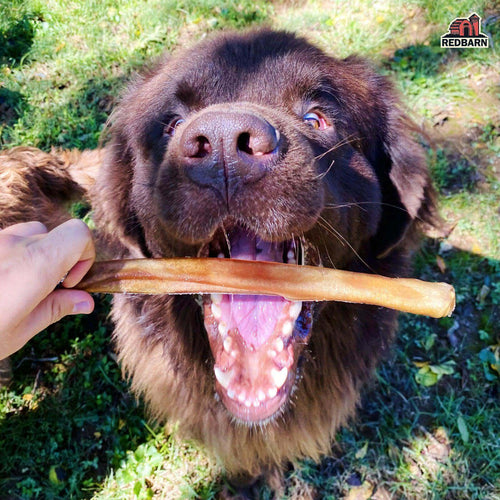
Redbarn Bully Sticks are made from beef pizzle, which is high in protein and easy to digest. They last longer than many raw bones and help clean teeth while your pup chews. Bully sticks come in different shapes and sizes, making them a safe and enjoyable treat for both small dogs and large dogs.
Filled Bones
Our Filled Bones are real beef bones stuffed with tasty flavors like peanut butter, cheese, or bacon. Unlike cooked bones, these are designed to be safe for chewing. They provide long-lasting entertainment and keep dogs busy while avoiding the dangers of sharp bone fragments.
Collagen Chews
Redbarn Collagen Chews are digestible treats made from beef collagen. They support joint health, which is especially helpful for adult dogs or seniors, and they also promote strong teeth and gums. Unlike raw chicken bones or pork bones, collagen chews are designed to break down safely in the digestive system.
Dental Treats
Dental treats like Redbarn Chew-A-Bulls and Dur-A-Bulls are made to fight plaque and tartar while also supporting better breath. They provide the chewing satisfaction dogs love without the choking hazard of brittle bones. Made from safe ingredients, they keep your pup’s mouth healthier and your mind at ease.
FAQs About Dogs Eating Chicken Bones
Can dogs eat cooked chicken bones?
No, dogs should never eat cooked chicken bones. Cooked bones are brittle and break into sharp pieces, which can harm a dog’s intestines or cause internal bleeding. Even a single cooked chicken wing or similar bone can pose a serious danger.
What happens when a dog eats chicken bones?
When dogs eat chicken bones, they risk injury to the digestive tract. Bone fragments may cause a choking hazard, upset stomach, or intestinal blockage. Symptoms can appear quickly or after several days, so it’s important to monitor your dog closely.
Will a dog be okay if they eat chicken bones?
While dogs that steal food may appear fine after eating bones, hidden dangers often lurk beneath the surface. A dog’s stomach acid isn’t always strong enough to fully dissolve sharp bone fragments, which can lead to serious complications. Always call your vet immediately if your dog eats a chicken bone, even if there are no obvious symptoms at first.
Key Takeaways
● Chicken bones aren’t safe. Both raw chicken bones and cooked chicken bones can splinter or contain harmful bacteria.
● Raw vs. cooked bones. Raw chicken bones still splinter, while cooked chicken bones shatter into even sharper fragments. Pork bones and beef bones are also unsafe.
● Hidden dangers. When a dog eats a chicken bone, bone fragments can injure the digestive tract or cause intestinal blockage.
● What to do. Stay calm, don’t induce vomiting, and call your vet immediately if your dog displays worrying symptoms. Monitor your dog closely afterward.
● Safer alternatives. Dog-friendly chews like Redbarn Bully Sticks, Filled Bones, Collagen Chews, and Dental Treats give dogs safe chewing satisfaction without the risks.
Should You Let Your Dog Chew Chicken Bones?
Chicken bones might seem harmless, but they can be dangerous for your dog’s health. Both raw and cooked bones can splinter, carry harmful bacteria, or cause internal injuries. To keep your pup safe, it’s best to avoid chicken bones entirely and go for safer chewing options.
At Redbarn, we’re dedicated to providing healthy, safe alternatives that satisfy your dog’s chewing instincts. So, why not protect your furry friend’s health while giving them something they’ll love to sink their teeth into?